Access to Justice 101

Kathryn E. Thomson, PhD Candidate, UVic (Law), along with several AJRN listserv subscribers, have indicated publications that they would include on their “Access to Justice Top Ten Must-Read” list. There is a lot of valuable research and commentary worth revisiting or, for those of you who are new to the topic, discovering for the first time. Here are the recommendations:

  1. Genn, Hazel. Paths to Justice: What People Do and Think About Going to Law (Portland, Ore: Hart Publishing, 1999).
  2. Cromwell, Thomas A. “Access to Justice: Towards a Collaborative and Strategic Approach” (2012) 63 U.N.B.L.J. 38.
  3. Friedman, Lawrence M. “Access to Justice: Social and Historical Context” in Mauro Cappelletti and John Weiser (ed) The Florence Access-to-Justice Project (Milan: Doti.A.Giuffe Editore, 1978) Vol II, Book I.
  4. Macfarlane, Julie. “The National Self-Represented Litigants Project: Identifying and Meeting the Needs of Self-Represented Litigants” (Kingsville, Ontario: Self-Published Report, April 2013).
  5. Reports for the National Action Committee on Access to Justice in Civil and Family Matters, February 12, 2013. Online: Canadian Forum on Civil Justice: http://www.cfcj-fcjc.org/action-committee
  6. Wexler, Stephen. “Practicing Law for Poor People” (1970) 79(5) The Yale Law Journal
  7. Currie, Ab. The Legal Problems of Everyday Life: The Nature, Extent and Consequences of Justiciable Problems Experienced by Canadians (Ottawa: Department of Justice Canada, 2007)
  8. Hadfield, Gillian. “Higher Demand, Lower Supply? A comparative assessment of the legal resource landscape for ordinary Americans” (Feb. 2010) Fordham Urban Law Journal
  9. Australian Government – Productivity Committee – Access to Justice Arrangements (2014): http://www.pc.gov.au/inquiries/completed/access-justice/report
  10. McEown, Carol. “Civil Legal Needs Research Report (Report prepared for the Law Foundation of BC March 2009, 2d ed) online: Law Foundation of British Columbia: http://www.lawfoundationbc.org/wp-content/uploads/Civil-Legal-Needs-Research-FINAL.pdf
  11. Brewin, Alison & Stephens, Lindsay. Legal Aid Denied (2004): http://www.westcoastleaf.org/wp-content/uploads/2014/10/2004-REPORT-Legal-Aid-Denied-Women-and-the-Cuts-to-Legal-Services-in-BC.pdf
  12. Brewin, Alison & Govender, Kasari. Rights-Based Legal Aid (2010): http://www.westcoastleaf.org/wp-content/uploads/2014/10/2010-REPORT-Rights-Based-Legal-Aid-Rebuilding-BCs-Broken-System.pdf
  13. Track, Laura, (in collaboration with Shahnaz Rahman and Kasari Govender. Putting Justice Back on the Map (2014): http://www.westcoastleaf.org/wp-content/uploads/2014/10/2014-REPORT-Putting-Justice-Back-on-the-Map.pdf
  14. CBA Access to Justice Committee. Reaching equal justice report: an invitation to envision and act (2013): http://www.cba.org/CBA/equaljustice/secure_pdf/EqualJusticeFinalReport-eng.pdf
  15. Roderick MacDonald’s work on access to justice in Canada – a list of his words can be found here: http://people.mcgill.ca/files/roderick.macdonald/macdonald-pubs.pdf
  16. Cohl, Karen & Thomson, George. “Connecting Across Language and Distance: Linguistic and Rural Access to Legal Information and Services” (2008): http://www.lawfoundation.on.ca/wp-content/uploads/The-Connecting-Report.pdf
  17. CLEO’s Centre for Research and Innovation host a research database through the PLE Learning Exchange website. The database is an annotated bibliography of research on public legal education and information (PLEI) issues from Canada and other jurisdictions, and also contains some papers on A2J generally where PLEI is referenced: http://www.plelearningexchange.ca/research/research-database/
  18. Action Committee on Access to Justice in Civil and Family Matters. “Access to Civil & Family Justice: A Roadmap for Change” (2013): http://www.cfcj-fcjc.org/sites/default/files/docs/2013/AC_Report_English_Final.pdf
  19. The National Self-Represented Litigants Project blog by Professor Julie Macfarlane houses many A2J articles: http://representingyourselfcanada.com/

Please note that this list isn’t exhaustive and additional suggestions are welcome. What publications would you include on your “Top Ten” list?

Send an email to communications@cfcj-fcjc.org with “AJRN subscribe” in the subject line to join the conversation taking place on the listserv!

Self-Rep Navigators

A Toronto-based lawyers group has launched the “Self-Rep Navigators” to direct legal services towards self-represented litigants. Described as “a hub for connecting self-represented litigants to supportive lawyers and high quality resources both online and offline”, Self-Rep Navigators have established a website at www.limitedscoperetainers.ca and list lawyers who will take clients on a limited scope retainer/ at fixed fees for civil and criminal matters, and those offering the same types of services to family clients.

Heather (hh@litigation-help.com) and Michael (mhassell@trialcounsel.ca) would like to hear from any other lawyers interested in being a part of this group.

You can find the full write up about Self-Rep Navigators here.

Action Committee Meeting of Provincial and Territorial Access to Justice Groups

On March 13, 2015 the Action Committee on Access to Justice in Civil and Family Matters (the Action Committee) convened a meeting for existing provincial and territorial access to justice groups (P/T A2J groups), many of which were formed in response to recommendation 5.1 of the Action Committee’s Roadmap Report.

The purpose of the meeting was to reflect on the progress made by these groups over the past year, discuss the access to justice initiatives underway in different jurisdictions, highlight promising developments, learn from common challenges, and consider collaborations and cooperation among justice stakeholders that could be further supported by the Action Committee.
The report can be accessed in English here and in French here.

Civil Non-Family Cases Filed in the Supreme Court of BC

Please find attached the recently released Final Report of the CFCJ’s Attrition Study. This study, which is a part of the CFCJ’s larger Cost of Justice project, aims to examine the outcome of unresolved, civil, non-family cases in the BC Supreme Court and assess the level of satisfaction among claimants. In addition to presenting the study’s survey findings, the report makes several recommendations that could potentially improve research that attempts to collect data about court users experiences. You can access the report here.

Justice, not Just Access: Effective Outcomes for Children Children’s Legal Rights – the Fundamentals

In May 2015, The Honourable Donna Martinson, Q.C., presented a paper entitled “Justice, not Just Access: Effective Outcomes for Children Children’s Legal Rights – the Fundamentals” at the Access to Justice for Children Conference – CLEBC in Vancouver, British Columbia.

The paper begins with an introduction on justice for children and moves on to an overview of how the United Nations Convention on the Rights of the Child applies in Canada. This overview includes both a description of how Canada has implemented this convention and how this related to the Charter.

The paper further goes on to discuss the Committee on the Rights of the Child, its role, the four general principles of the Convention and an evaluation of State compliance. It also analyses when children’s rights must be considered and what Canada’s obligations are under the Convention.

In the final section of the paper, “A Roadmap for Change for Children – Access to Justice Phase 2”, Honourable Donna Martinson “respectfully suggest(s) that now is the time to integrate into our national access to justice discussions a specific roadmap which recognizes the special considerations that apply in order to achieve justice for children…”

A subscription to the webinar archive can be accessed at http://www.cle.bc.ca/onlinestore/productdetails.aspx?cid=1134

Innovation and Access to Justice Conference

Please see below, a reminder from Sherry MacLennan, Director, Public Legal Information & Applications, Legal Services Society

This is a reminder that the Innovation and Access to Justice Conference is just a few weeks away – October 1 and 2. A few spots remain available and we are hoping to sell out. It is attracting a broad swath of interest from innovators across the legal community, ranging from government, law societies, legal aid, the private bar, PLEI providers and academics from across Canada.

This conference is in Montreal for the low registration fee of $175 to ensure the conference’s accessibility. However, this will increase to $200 on September 28. The final date to register is September 29. It will not be possible to register in person at the conference.

You may view the agenda and register at: http://iaj2015.openum.ca/registration/


Law Society of Yukon Supports Gladue Program Pilot Project

Capture- Yukon Gladue - Research and Resource Project

In an information bulletin released by The Law Society of Yukon, they acknowledge the seriousness of access to justice issues in remote and northern communities across Canada and identify four areas of particular concern:

  1. Lack of social resources
  2. Lack of legal resources
  3. Lack of alternative measures and restorative justice programs
  4. Lack of Gladue information before the Courts

The Law Society recently expressed their support for the Gladue Pilot project aimed at addressing these and related, longstanding access to justice issues.

Read the Yukon Gladue Research and Resource Identification Project Report in full here.

Unprecedented Legal Aid Funding Increase In Ontario: Questions Remain

Legal aid ontario

Although the Ontario government’s unprecedented multi-year commitment to increasing legal aid funding continues to move forward, the National Self Represented Litigant Project cautions that celebration may be premature. In a recent blog post, the NSRLP congratulates the decision to increase legal aid funding, but poses a few critical questions about the implementation of aid distribution which has yet to take place.

Semple Explores Civil Justice Costs for Canadians

Screen Shot 2015-06-23 at 10.53.32 AM

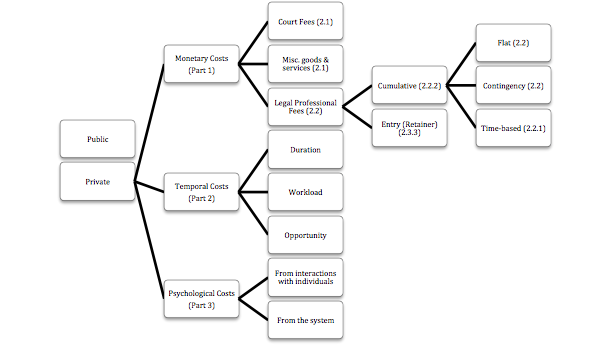
Noel Semple has recently released a paper contributing to the ongoing discussion surrounding the cost of civil justice in Canada. He draws attention to the financially burdensome nature of civil justice claims, as well as temporal and psychological costs involved with legal disputes. His thorough investigation of the issue draws on the National Self Represented Litigants Project for quantitative information about the true costs of accessing civil justice. The paper is available on SSRN.