
The House of Commons Justice Committee in the UK recently released its report on the impact of civil legal aid reform on access to justice and here is a response from the UK Law Centres Network.
The House of Commons Justice Committee in the UK recently released its report on the impact of civil legal aid reform on access to justice and here is a response from the UK Law Centres Network.

For those following the legal aid reforms debate in the UK, another article from the BBC that looks at the ramifications of the Legal Aid, Sentencing and Punishment of Offenders Act which took many civil cases out of the scope of legal aid in April 2013.
**Repost from Canadian Legal Ethics listserv**
An exciting two day B.C. Continuing Legal Education Society conference called Access to Justice for Children will take place in Vancouver, at the Pan Pacific Hotel, on May 14-15, 2015.
From the conference description:
The Canadian legal profession is engaged in critically important discussions about access to justice. Ensuring access to justice for children must be a key component of those discussions. Children in Canada have broad legal entitlements under domestic and international law, including significant participatory rights, which have the potential to shape their everyday lives in positive ways and to protect them when they become involved in court, alternative dispute resolution (ADR), or administrative processes […] All lawyers have obligations to prepare, with the participation of children, Child Rights Impact Statements for all legislative and policy decision making.
The conference agenda can be found here.
Keynote speakers include:
Other out of province speakers who are committed to advancing children’s rights include:
Judge Marion Buller and Judge Rose Raven from the B.C. Provincial Court and Justice Margot Fleming from B.C. Supreme Court) also bring their considerable knowledge and keen interest in justice for children to our access to justice discussions.
The Chicago Tribune has a story on how the ABA is using technology to make legal services more accessible.

Here is a response from Richard Zorza’s blog.
Richard Zorza’s access to justice blog has a post noting the improved communications capacity of the access to civil justice movement in the US, and another questioning whether new judicial ethics rules will increase complaints from SRLs.
The Washington Post has an opinion piece on whether non-lawyer service providers can help close the “justice gap”.
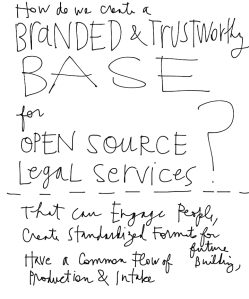
At the Open Law Lab blog, Margaret Hagan has an idea for an open source legal software hub, as well as posts on the concept of care in legal service delivery, and a research project on how people use the internet for legal services.
 ajrn.org